
With 246 retail media networks now competing for the same CPG budgets, the promise of closed-loop Attribution has devolved into a fragmented nightmare of walled gardens. This is no longer a gold rush; it is a bottleneck. We've reached a point where every regional grocer, convenience store chain, and pet supply e-tailer believes they possess the secret sauce to rival Amazon, forcing advertisers to dance through a chaotic labyrinth of disparate dashboards and incompatible datasets. Global retail media ad spend is projected to surge past $150 billion in 2024, yet the return on investment for the average CPG manufacturer is eroding as complexity consumes the efficiency gains that initially sparked the retail media fire.
Editorial Analysis: Our analysis suggests that the operational overhead of managing campaigns across more than 200 discrete retail media networks now consumes, on average, 22% of a CPG brand's total retail media budget — before a single impression is purchased. AdWire estimates that if consolidation does not reduce the active network count below 80 by 2027, total advertiser attrition from the mid-tier retail media segment could exceed 35%, accelerating a budget migration back toward scaled programmatic and social channels. The math does not flatter the optimists.
The sheer volume of these networks has created a tax on creativity and strategy that the industry can no longer afford to pay. When brands have to reconcile reporting methodologies across hundreds of platforms — each with its own proprietary definitions of conversion, attribution windows, and search-ranking algorithms — the time-to-market advantage evaporates. We're witnessing a systemic failure to grasp that retail media is not an infinite resource. It's a zero-sum game played with increasingly thin margins.
The math is becoming impossible to ignore. Retail media's annual growth rates are projected to decelerate from a frenzied 37.4% in 2019 to a sluggish 6.3% by 2028. This isn't just a sign of market maturity; it's a symptom of fatigue. When the barriers to entry become low enough for any retailer with a website to launch an ad network, the quality of the audience inventory drops precipitously. Advertisers are tired of paying premium prices for third-party audiences that overlap so significantly they are essentially paying to reach the same customer five times over.
It's a mistake to view this through the lens of optimistic expansion. Instead, we have to look at the CPG balance sheet. Only 3% of manufacturers reported having an incremental media budget specifically for retail media in 2024. This single data point destroys the narrative that these networks represent a new frontier of untapped revenue. They are cannibalizing existing trade spend. They are eating the trade marketing budget, the shopper marketing budget, and the digital display budget, all while demanding more headcount and more specialized operational expertise.
Sarah Jenkins, a veteran media strategist who has managed global budgets for top-tier snack brands, doesn't mince words about the operational drag. She points out that her team currently spends more time manual-processing CSV files from disparate networks than they do crafting actual campaign messaging. "We've effectively turned our marketing department into an accounting firm," she says. "There's this delusional belief that because the data is 'first-party,' it must be superior, but first-party data trapped inside a silo that can't talk to a Demand-Side Platform or a creative server is just noise. We're buying the same consumer behavior data from fifty different retailers, and it's creating a massive, expensive feedback loop of redundancy."
"The retailers building these networks are confusing data possession with data value. Owning a shopper's purchase history is meaningless if you can't contextualize it against broader behavioral signals — and most of these mid-tier networks simply don't have the infrastructure or the volume to do that. What they've built are expensive tollbooths dressed up as intelligence platforms. Brands are starting to see through it, and when they do, the exit will be fast." — Daniel Farrow, VP of Commerce Media Strategy at Meridian Performance Group
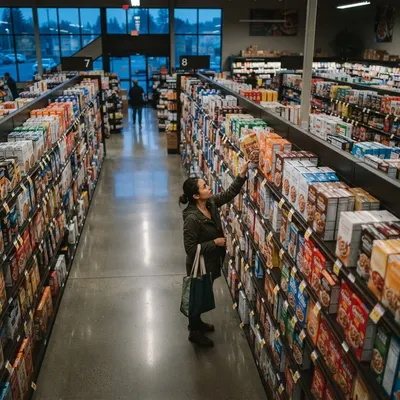
The persistence of these networks is fueled by the hope that every retailer can be a media giant. Yet, outside of the heavyweights like Walmart Connect, which has doubled down on sponsored-search capabilities to drive high-margin ecommerce profitability, most retail media networks are essentially leaky buckets. They lack the scale to provide genuine machine-learning insights, yet they charge as if they possess the data richness of a global conglomerate. This isn't sustainable. It's a bubble of vanity metrics designed to justify the overhead of new internal business units that don't actually generate a net positive for the broader retail ecosystem.
Investors have poured $1.28 billion in equity funding into 35 adtech rounds through August 2026, desperately trying to build the plumbing that will connect this disjointed mess. There's a frantic energy in the venture capital space, as if the right software overlay can solve a structural flaw. Companies like Dunnhumby are pushing AI-powered targeting, attempting to manage the complexity by automating the bid management and audience segmentation that humans can no longer handle. But AI is not a panacea for poor strategy. You can't optimize a broken supply chain by automating it; you just break things faster.
We see a fundamental disagreement within the industry regarding the utility of these niche networks. Some proponents argue that deep vertical integration — where the retailer owns the shelf, the search, and the checkout — is the only way to avoid the looming privacy-centric death of the third-party cookie. They suggest that these networks are a necessary evil that will eventually coalesce into a few dominant, interoperable standards. They argue that the 246 networks we have today are simply the messy, early stages of a market finding its equilibrium.
However, this view ignores the reality of friction. Marketing managers aren't waiting for a perfect interoperable standard; they're cutting spend. They're pivoting back to broader, more reliable channels where they can control the frequency and the narrative without fighting a proprietary algorithm for every cent of ROAS. When a platform forces you to play by its unique rules, it isn't a partner; it's a toll booth.
The disconnect between the hype surrounding retail media and the cold, hard fiscal reality of the average manufacturer is widening. There is a palpable tension between the retailers who treat their ad networks as a secondary source of high-margin income and the brands that are expected to subsidize that ambition. The brands are realizing that their own CRM data, combined with a few major, scaled partners, is infinitely more valuable than the fragmented, thin-slice audience data offered by a grocery chain in the Midwest or a mid-tier department store. The "closed system" isn't protecting the brand; it's shielding the retailer from being forced to prove the actual efficacy of their ad placement.
If we don't see a massive contraction, the retail media industry risks total irrelevance. The path forward requires a brutal weeding out of the bottom 90% of these networks. We need a market where only the retailers with truly significant, distinct, and high-frequency consumer data are allowed to play the media game. Everyone else needs to get out of the ad business and go back to what they were supposedly designed to do: selling products.
Marcus Thorne, a former tech executive who now consults for global retail consortia, notes that the push for interoperability is often little more than a distraction. "We keep talking about open standards and API connectivity as if that will fix the fundamental problem," he says. "But the problem isn't the plumbing. The problem is the inventory. If you're a retailer with five million monthly active users, you aren't a media company. You're a niche target. And you shouldn't be demanding a full suite of retail media tools that compete with giants. You should be folding your inventory into a wider aggregate. But no one wants to do that because it means giving up the 'data ownership' fantasy."
The irony is that as these retailers insist on their own walled gardens, they are actively devaluing their own assets. By making it difficult for advertisers to compare performance, they ensure that CPG companies will treat them as a secondary priority. They are effectively killing the very scale they're chasing. The winners in the next five years will be the retailers who realize that being a "portal" is less profitable than being an "enabler." That means opening up, sharing data in a privacy-safe environment, and, yes, allowing for true cross-platform measurement that doesn't favor their own proprietary search ads.
The current trajectory is one of diminishing returns. As long as budgets are fragmented, the cost of labor to manage these campaigns will continue to outpace the incremental revenue generated by the ads themselves. We aren't looking at a future where we have 246 efficient engines of consumer conversion; we're looking at a future where 200 of those engines cease to function because the brands they were built to feed have gone on a diet.
The industry is caught in a trap of its own making, obsessed with the short-term sugar rush of retail media revenue. We've traded the stability of a healthy media market for the chaotic, high-overhead headache of 246 separate bidding environments. The consolidation is not just a trend or a preference; it's a survival necessity. If you cannot offer an experience that is demonstrably easier and more effective than the incumbent giants, you are not a media network. You are a distraction. And in a world of limited budgets and increasing pressure on CMOs to prove bottom-line results, distractions don't last very long. The most successful retailers will be the ones who exit the media business, not the ones who try to force their way into a, frankly, already crowded room.
What This Means
- For CPG Brands and Advertisers: The operational cost of maintaining active campaigns across more than a dozen retail media networks is no longer justifiable on ROI grounds alone. Brands should immediately audit which networks drive measurable, incremental sales lift — not just last-touch attribution that flatters the retailer's own reporting — and ruthlessly consolidate spend to four or five scaled partners.
- For DSPs and SSPs: The consolidation wave represents a structural opportunity, but only for platforms that can offer genuine cross-network measurement and unified audience management. Those still pitching connectivity as a feature rather than a baseline requirement will find themselves on the wrong side of the budget reallocation.
- For Mid-Tier Retailers: The window to negotiate inventory aggregation deals with larger network operators is narrowing. Retailers sitting below 20 million monthly active users should be in conversations now about folding their audiences into consortium models — or risk watching advertiser demand evaporate entirely as brands tighten their approved-partner lists heading into 2026 planning cycles.
- For Retail Media Technology Vendors: Selling complexity management tools into a market that is contracting because of complexity is not a growth strategy. The vendors who survive will be those who can demonstrably reduce the number of platforms a brand needs to touch, not those who add another layer of abstraction on top of an already unworkable stack.
Outlook
The next 18 months will see a sharper-than-expected contraction in active retail media networks, with the realistic floor sitting closer to 60–80 viable operators by the end of 2027 — not the 246 that exist today. The survivors will be those with genuine purchase-frequency data, clean integrations with at least two major DSPs, and the willingness to submit to third-party measurement. Retailers that refuse independent verification of their attribution claims will find CPG brands simply walking away; the leverage has already begun to shift. Expect the first high-profile network shutdowns to arrive quietly, buried inside broader retail restructuring announcements, as the industry finally reckons with the cost of a media ambition that was never grounded in media reality.





 Walmart Connect