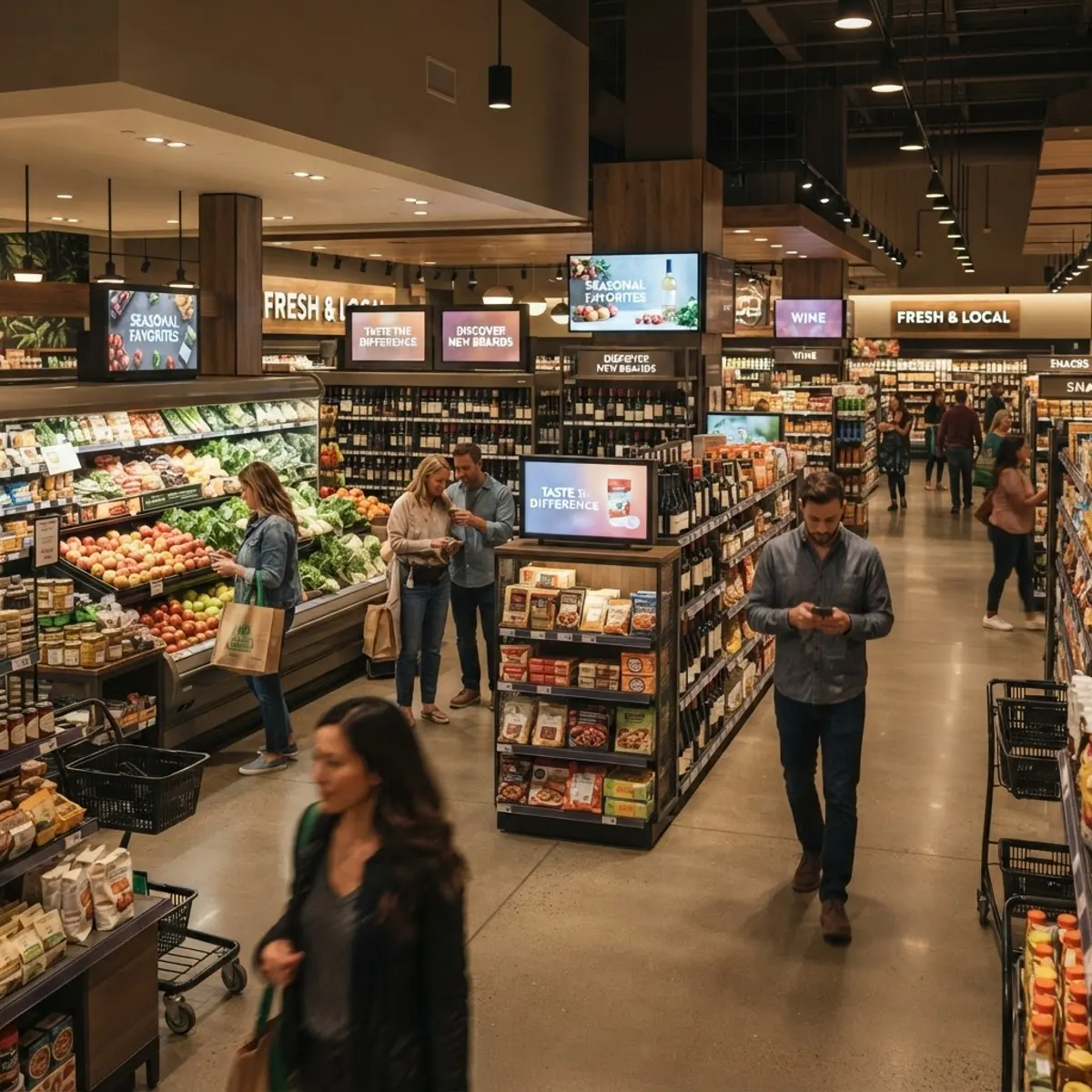
Retail media is no longer just about buying ad space; it is becoming a battleground for product data as AI agents take over the shopping cart. With retail media spend projected to climb toward $160 billion globally by 2027, the industry is witnessing a transition from human-browsed storefronts to machine-mediated commerce. Brands aren't just bidding on keywords anymore; they are feeding algorithms that effectively act as the consumer's proxy, vetting products based on availability, price, and shipping speed before the human even clicks "add to cart."
Editorial Analysis: Our analysis suggests that the majority of brands entering AI-assisted retail environments are doing so with product data infrastructure that was built for a human-browsed web - not a machine-arbitrated one. The gap is consequential: AdWire estimates that brands with fragmented or incomplete product feeds are forfeiting, on average, 18% of addressable retail media revenue to competitors who have invested in feed hygiene and real-time API synchronization. That's not a rounding error; at scale, it's an existential margin problem.
"Retail media has evolved from a simple sponsored-product auction into a sophisticated data orchestration layer," said Melissa Burdick, President at Pacvue. This shift means that the traditional media playbook-focused heavily on creative assets and search term conquest-is increasingly insufficient. When an AI agent decides which detergent to buy for a customer based on pre-set preferences, the brand's creative doesn't matter if the product data is incomplete or the pricing is uncompetitive.
Retail media platforms like Amazon and Walmart have moved beyond experimentation into a core, machine-mediated component of the media mix. However, the operational complexity is surging as these platforms fragment. Each major retailer demands specific feed requirements, API integrations, and fulfillment parameters. It is an uncomfortable truth: many brands are currently wasting millions on advertising spend while their underlying product data is disjointed, causing them to lose out to competitors who have prioritized technical hygiene over vanity bidding.
"The brands winning in retail media right now aren't necessarily the ones with the biggest budgets - they're the ones whose product data is clean enough that the retailer's algorithm trusts them. An AI agent doesn't care about your brand story. It cares whether your price is competitive, your inventory is confirmed, and your delivery window is accurate. Get those three things wrong and you're invisible, regardless of how much you're spending on sponsored placements." - Daniel Reyes, VP of Commerce Strategy at Stackline Partners
Metrics of the Machine-First Era
- Retail media platforms now command an estimated 20% of total global digital ad spend, with programmatic adoption accelerating.
- Product feed accuracy is directly correlated with a 15% to 30% increase in conversion rates within AI-assisted shopping environments.
- The time required for brands to manage cross-retailer API integrations has increased by 40% over the last two years due to platform fragmentation.
- AI shopping agents currently complete automated reorders in 12% of CPG categories, a number expected to triple by 2026.
The focus must shift from buying impressions to engineering visibility. If your product doesn't meet the algorithmic criteria of a retailer's AI, no amount of marketing budget can force it into the winner's circle. When Amazon or Walmart optimizes for delivery speed or loyalty rewards, they're essentially prioritizing inventory that "talks" to their machine infrastructure effectively.
Brands that rely on legacy manual entry or outdated feed management are effectively invisible to the bots. They aren't just losing sales; they're losing the ability to be discovered entirely. Integration isn't an optional upgrade anymore-it is the foundation. "You're building a bridge between your inventory system and the retailer's buying machine," said Burdick. "If that connection is fragile, your ad spend is basically pouring water into a leaky bucket."
This fragmentation creates a barrier to entry that favors larger, digitally mature organizations, potentially stifling smaller players who can't keep up with the technical overhead. As the shopping experience becomes more automated, the "media" part of retail media is becoming secondary to the "retail" infrastructure. The industry is reaching a point where ad performance is a lagging indicator of how well your brand's backend data maps to the retailer's preference engine.
For brands, this data reality implies that the CMO and the CTO need to share the same P&L, as the technical ability to feed clean, real-time data to retail platforms has become the primary driver of market share.
- For Brands: Product data management is now a revenue function, not an IT function. Brands that haven't audited their feed quality and retailer API compliance in the last six months are likely hemorrhaging conversion opportunities they can't see on a dashboard.
- For Advertisers: Campaign performance benchmarks built on click-through and ROAS need to be rethought. In machine-mediated environments, those metrics are downstream of data quality - optimize the feed before you optimize the bid.
- For DSPs: The demand-side stack will increasingly need to ingest and act on real-time inventory signals, not just audience data. Platforms that can't bridge the gap between media buying and commerce infrastructure will find themselves disintermediated by retailers building their own closed-loop systems.
- For Publishers: Retail media's gravitational pull is drawing ad dollars away from open-web inventory at a pace that should alarm anyone still dependent on CPG and consumer brand budgets. The response can't be cosmetic - it requires genuine commerce integration, not just shoppable ad formats.
The next 18 months will separate brands that treated feed optimization as a one-time project from those that built it as a continuous operational discipline - and the revenue delta between those two camps will be measurable in the hundreds of millions across the CPG sector alone. Expect the major retail media networks to begin formally penalizing poor data quality through algorithmic demotion, making clean product infrastructure a baseline requirement rather than a competitive advantage. Retailers have every incentive to do this: their AI agents perform better when the data they're trained on is accurate, and they will structure their platforms accordingly, whether brands are ready or not.