
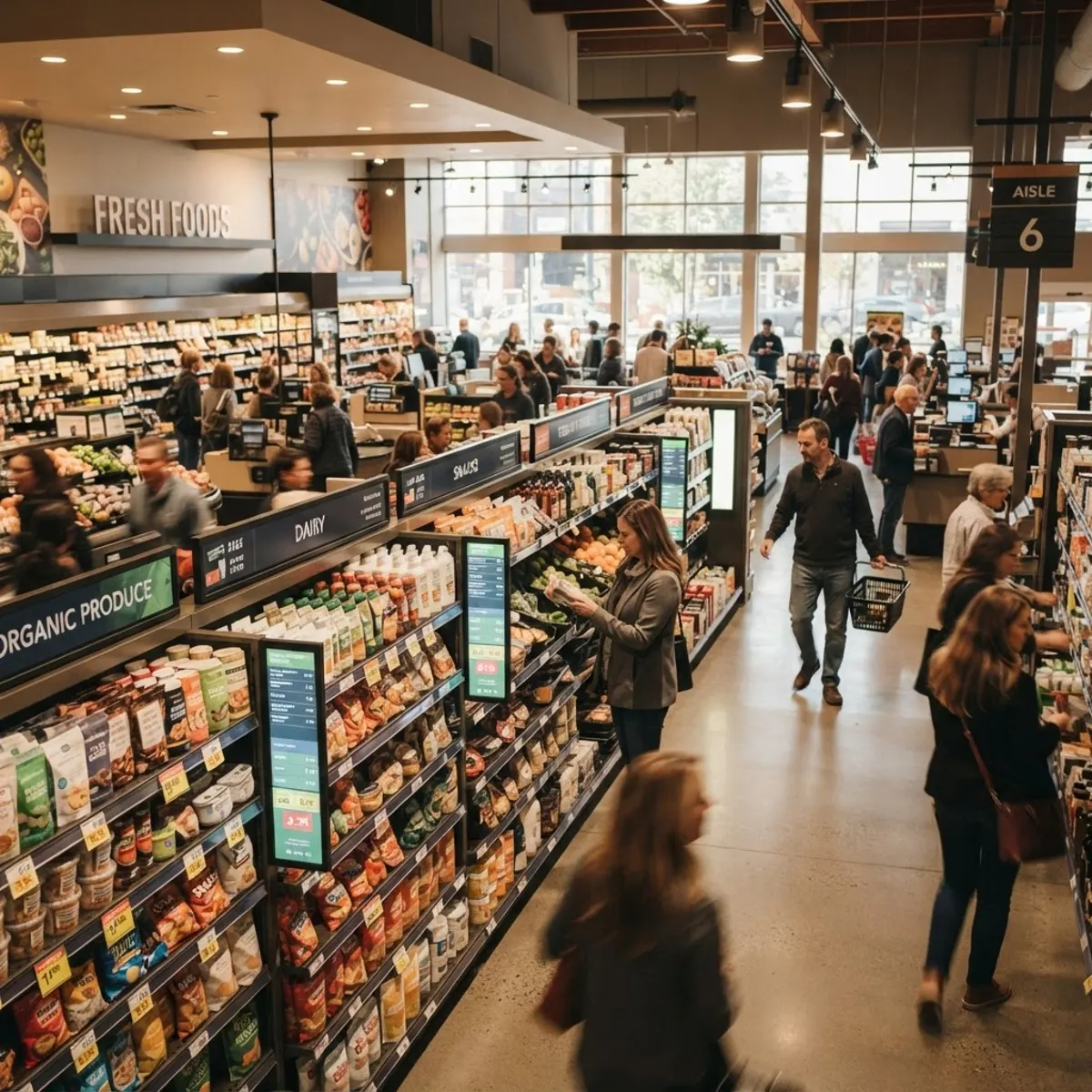
The next major frontier for media isn't a new social feed or streaming app- it is the shelf edge inside your local grocery store. VusionGroup is betting heavily on this reality, announcing its acquisition of In-Store Media, a move that consolidates the digital shelf and the point-of-sale display into a single, high-octane advertising machine. By absorbing the Barcelona-based specialist in retail media monetize, VusionGroup is positioning itself as the primary infrastructure provider for what retail executives now view as their most lucrative profit center.
Our analysis suggests this acquisition is less about adding revenue and more about locking in infrastructure dominance before the in-store media market fully standardizes- a window that will likely close within 18 to 24 months. With in-store retail media ad spend projected to exceed $1.1 billion in Western Europe alone by 2026, the company that owns the operating layer owns the margin. AdWire estimates that retailers currently monetize less than 12% of their available in-store digital display inventory at programmatic rates, which frames the size of the prize here precisely.
Retail media has transitioned from a fringe experiment to the backbone of modern retail margins. While retailers have mastered the art of charging brands for search results on their websites, the physical aisle- where 80% of transactions still occur- remains notoriously offline. This acquisition aims to shatter that wall. VusionGroup, already a global leader in AI-powered digitalization for physical retail, is effectively wiring the store for data. By integrating In-Store Media's expertise, they aren't just selling digital price tags; they're building a thorough network that translates physical foot traffic into measurable, programmatic ad impressions. It's an ambitious play to harmonize online Attribution with the messy, tactile reality of a brick-and-mortar storefront.
The industry is currently grappling with an uncomfortable truth: retail media is hitting a saturation point in pure e-commerce. As ad loads on retail sites grow heavier, user experience degrades, leading to diminishing returns for brands. The shift toward physical store monetize is the logical, if difficult, next step. This deal targets exactly that transition. "We are effectively turning the shelf edge into a live shopper engagement hub, closing the loop between digital intent and physical discovery," said Thierry Gadou, CEO at VusionGroup.
"The brands that win the next decade of shopper marketing won't be the ones with the biggest digital budgets- they'll be the ones that figured out how to own the last three feet of the path to purchase. VusionGroup acquiring In-Store Media isn't a bet on screens; it's a bet on becoming the Google Analytics of the physical aisle. Whoever controls the measurement layer controls the spend." - Dr. Margot Leclaire, Head of Retail Media Strategy at Meridian Commerce Partners
The integration of these two entities is not merely a play for market share; it is a defensive maneuver against the creeping encroachment of pure-play ad platforms into the shopper's path-to-purchase. By standardizing the format and reporting metrics for in-store media, VusionGroup is working to make the shelf as easy to buy as a sponsored post on a social network. They have set a clear financial target, looking for this expansion to be fully integrated into H1 2026 revenue reporting.
However, the friction remains. Retailers are famously protective of their own bespoke systems, and convincing thousands of distinct brick-and-mortar locations to adopt a unified ad-tech stack is an engineering nightmare of epic proportions. If they succeed, the physical store will stop being a cost center for stocking shelves and start functioning as a high-margin digital media property. If they fail, the industry will remain fragmented, stuck with disparate, unscalable screens that clutter aisles without ever delivering a true return on investment. The bet is that brands will pay a premium to stop guessing where their customers are looking. Every inch of shelf space is now a potential billboard, and VusionGroup intends to own the pixel-perfect view of the consumer's final choice.
- For Brands and Advertisers: Expect a more structured, CPM-based buying model for in-store placements to emerge- one that finally gives FMCG and CPG brands the closed-loop attribution they've been demanding from physical retail for years. Early adopters who commit budget now will benefit from launch pricing before inventory becomes competitive.
- For DSPs and SSPs: The pressure to build or acquire in-store inventory connectors just became real. A standardized VusionGroup ad stack opens the door for programmatic pipes into physical retail- but only for platforms willing to move fast. This isn't a 2027 roadmap item anymore.
- For Competing Retail Media Networks: The consolidation clock is ticking. Retailers operating proprietary, siloed in-store display networks now face a well-capitalized competitor offering a turnkey alternative. The argument for building versus buying just shifted dramatically toward buying.
- For Publishers: The in-store screen is becoming a legitimate inventory category. Those in proximity media, DOOH, and contextual display should be watching VusionGroup's measurement framework closely- it will set the reporting benchmark the rest of the industry is forced to match.
VusionGroup will almost certainly face its first serious stress test not in the boardroom but at the retailer level, where IT procurement cycles and legacy infrastructure contracts have killed more promising ad-tech rollouts than any market downturn. The H1 2026 integration target is aggressive; a more realistic inflection point is late 2026, when the first standardized cross-retailer campaign data becomes available and brands can finally compare in-store CPMs against verified foot traffic metrics. If that data is clean and compelling, this deal will be remembered as the moment physical retail stopped being the dumb pipe of the advertising ecosystem- and started charging accordingly.


