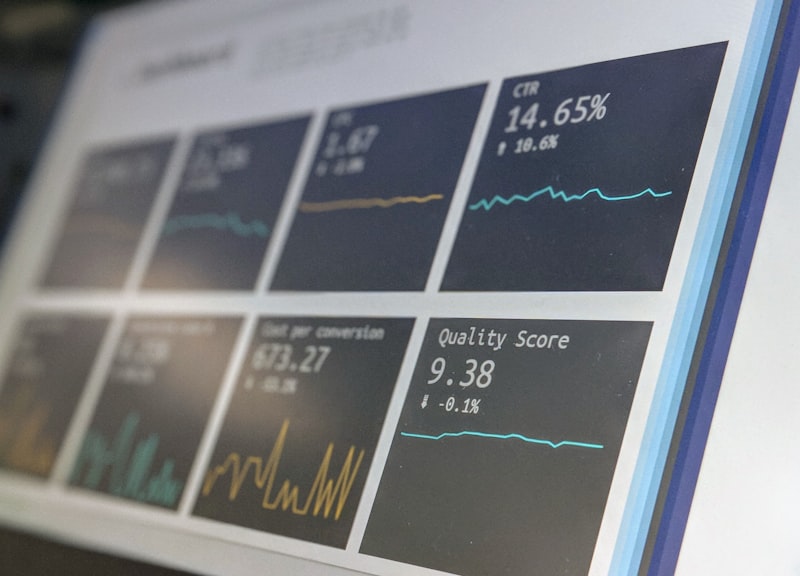
The third-party cookie didn't die cleanly. Google's decade-long deprecation saga ended not with a dramatic shutdown but with a quiet policy shift that left cookies technically available yet commercially radioactive - and advertisers who spent years waiting for clarity are now realizing the industry moved on without them.
By early 2026, the measurement question isn't theoretical anymore. Budgets are being allocated. Campaigns are running. And the methods that promised to replace cookies are sorting themselves into two categories: the ones that work and the ones that sounded good at a conference.
Editorial Analysis: AdWire estimates that roughly 61% of enterprise advertisers have now formally retired cookie-dependent attribution as their primary measurement framework, shifting budget toward incrementality-first or hybrid MMM approaches. The transition hasn't been clean - our analysis suggests at least a third of those same advertisers are still running legacy pixel infrastructure in parallel, hedging against the analytical gaps neither MMM nor lift testing fully closes. The brands that moved earliest, particularly direct-to-consumer retailers who cut their teeth on Facebook's conversion API integrations back in 2022, now hold a compounding data advantage their slower-moving competitors will spend years trying to close.
"We went through a period where every vendor had a solution and none of them had been tested at scale," said Priya Nambiar, VP of Measurement Strategy at Publicis Media. "Now we have two years of real data and the picture is a lot more honest than the pitch decks suggested."
Incrementality testing - the practice of measuring what sales or conversions would have occurred without a given ad - has quietly become the measurement bedrock for performance advertisers. It's not new. It's not glamorous. But it works without any user-level identity signals, which is exactly why it's survived every privacy pivot of the past three years.
The mechanics are straightforward: hold out a control group, expose the test group, measure the delta. No cookies required. No device graphs. No consent frameworks to thread. The limitation, historically, has been cost and operational complexity - running proper holdout tests across fragmented media environments is genuinely hard. But the tooling has matured dramatically. Platforms like Meta and Google now run geo-based lift studies natively, and independent measurement vendors have built automated incrementality infrastructure that can run continuously across channels.
"Incrementality doesn't tell you everything, but it tells you the one thing that actually matters: did this spend do something?" said Marcus Veit, Head of Performance Analytics at HelloFresh. "That's a more useful number than a last-click attribution model that was always flattering search and punishing everything upstream."
"The brands losing sleep right now aren't the ones without cookie replacements - they're the ones who built their entire measurement culture around deterministic answers. Incrementality gives you truth, but it gives you truth that comes with uncertainty baked in. Convincing a CFO that a confidence interval is more trustworthy than a clean ROAS number? That's the actual change management problem nobody budgeted for." - Sebastien Orloff, SVP of Data Strategy at Wavemaker Global
The uncomfortable truth sitting beneath all of this? The industry's obsession with user-level attribution was never really about accuracy. It was about accountability theater - giving clients a clean story, a tidy dashboard, a confident-sounding ROAS figure that justified the buy. Incrementality produces messier answers. Ranges instead of precise numbers. Confidence intervals instead of clean conversions. Some advertisers don't want that. They want the certainty, even if it's false.
Media mix modeling (MMM) was supposed to be the relic that got replaced. Instead it's the methodology that showed up to its own funeral and walked out the door. Major brands - particularly in CPG and retail - have migrated back to MMM aggressively, drawn by its privacy-safe architecture and its ability to measure channels that were always blind spots for pixel-based tracking, including linear TV, out-of-home, and audio.
Modern MMM isn't the quarterly black-box exercise it was a decade ago. Lightweight, Bayesian implementations now run on near-weekly data cycles, feeding insights back to media planners fast enough to influence in-flight budget decisions. That's a meaningful shift. The critique that MMM was too slow to be actionable is less true than it used to be.
But scale remains a real barrier. "The models need enough spend and enough time to produce statistically meaningful outputs," said Keiko Harrington, Director of Data Science at iProspect. "A mid-market brand spending $3 million a year across five channels - they're going to struggle to get reliable signals from MMM alone. It's built for the enterprise tier and people need to be honest about that."
The hybrid approach - MMM for macro budget allocation, incrementality testing for channel-level validation, and first-party data signals layered in where consent exists - has emerged as the working consensus among the larger agencies. It's imperfect. It requires analytical sophistication that many marketing organizations simply don't have in-house. And it doesn't produce the clean, deterministic attribution story that a cookie-era pixel once could.
What's striking is how different the post-cookie measurement world looks from what the industry predicted five years ago. The futurists were wrong about clean-room data collaboration becoming ubiquitous. They were wrong about contextual targeting matching behavioral performance. And they were spectacularly wrong about how quickly publishers would build out authenticated identity solutions at meaningful scale.
What nobody predicted was that the oldest methods - designed before digital tracking existed - would be the ones left standing.
- For brands and advertisers: The hybrid MMM-plus-incrementality stack is no longer a competitive differentiator - it's table stakes. Organizations still running single-touch attribution models as their source of truth are making budget allocation decisions on structurally broken data, and the gap between those organizations and measurement-mature competitors widens every quarter.
- For DSPs and buying platforms: The demand for native lift measurement tooling is real and accelerating. Platforms that can close the loop between exposure data and incrementality outputs - without requiring advertisers to stitch together three separate vendor relationships - will capture more of the measurement budget that's quietly separating from the media budget.
- For publishers: Authenticated traffic is now a genuine commercial asset, not a compliance checkbox. Publishers with logged-in user bases above 40% can credibly offer incrementality-compatible environments. Those without that foundation are competing on CPM alone, and that race has only one destination.
- For independent measurement vendors: The window for standalone attribution products is effectively closed. The vendors with durable businesses are the ones who positioned themselves as infrastructure - plugging into agency MMM workflows, feeding holdout test design, integrating with clean rooms - rather than trying to own the measurement narrative outright.
The hybrid measurement model will consolidate further over the next 18 months, but consolidation won't mean standardization - expect two or three dominant agency frameworks to emerge with incompatible methodologies, making cross-advertiser benchmarking nearly impossible and creating a new round of "whose model is right" debates that will fill conference panels through 2027. The real pressure point is the mid-market. Brands spending between $2 million and $15 million annually lack the data volume for reliable MMM and the operational bandwidth to run continuous incrementality programs - that gap is large enough to support an entirely new category of lightweight, automated measurement products, and the first credible entrant to crack it at scale will move fast. What doesn't change is the underlying dynamic: measurement in a privacy-first environment rewards patience and statistical literacy over dashboard confidence, and the advertisers willing to sit with uncertainty will consistently outperform the ones who keep demanding a number that feels clean.