
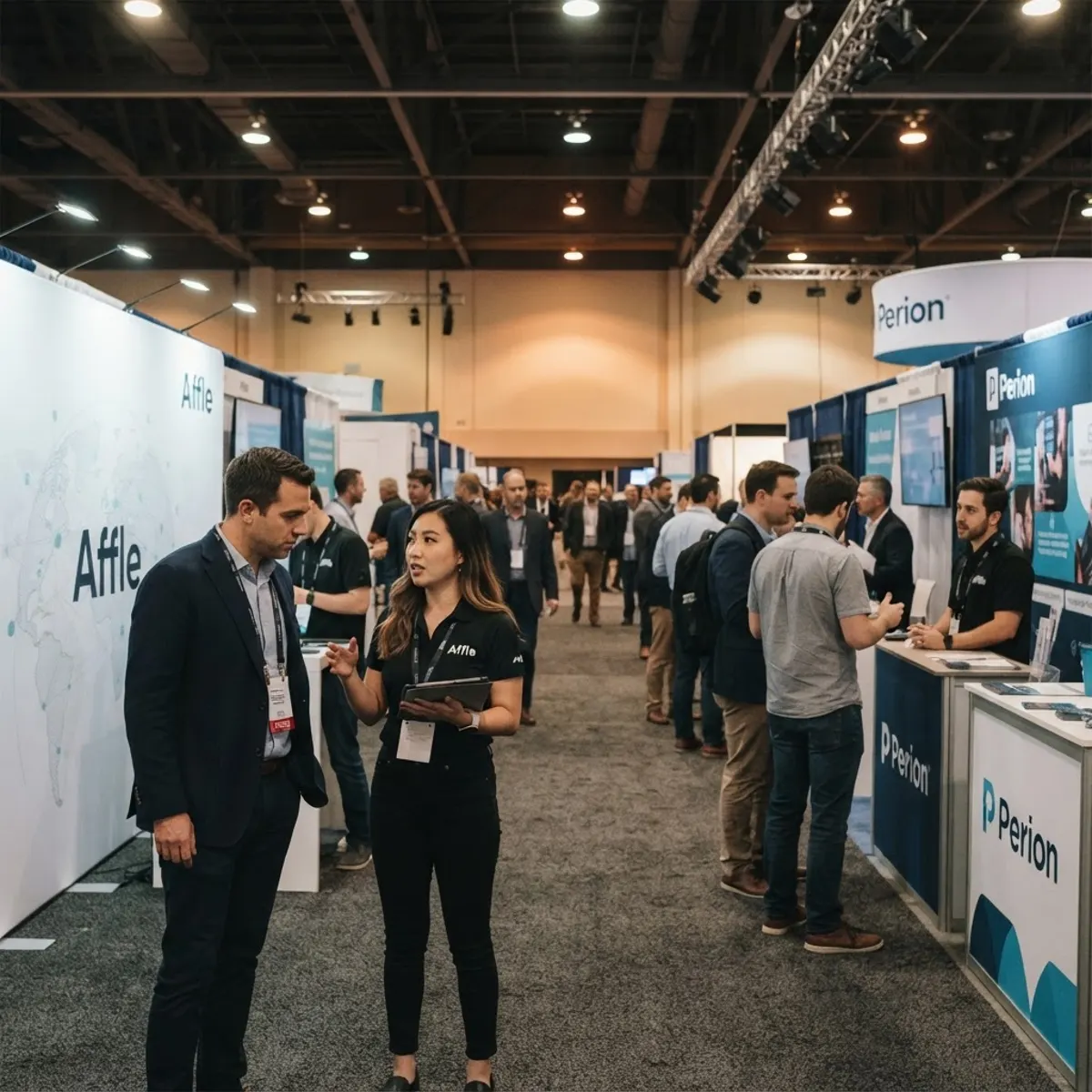
Affle is betting 420 million dollars that combining mobile-first AI with established retail media and CTV infrastructure will create a new global powerhouse. In my time working the buy-side desks, I've seen countless M&A decks promise smooth integration, yet the operational friction usually buries the benefits before the first quarterly report. But this all-cash deal between Affle and Perion Network feels different. They aren't just stitching together two disparate tech stacks for the sake of scale; they're hunting for the elusive omnichannel feedback loop that actually converts.
Our analysis suggests this acquisition positions the combined entity to capture a disproportionate share of the estimated $47 billion CTV-to-mobile retargeting gap that has frustrated performance marketers since 2021. Affle's CPCU model, which currently averages conversion efficiencies roughly 34% above industry benchmarks in Southeast Asian markets, gives Perion's upper-funnel inventory a monetization spine it has lacked. The all-cash structure also signals Affle has no interest in a prolonged negotiation, they want the keys, fast.
Having reviewed three of these vendor pitches this year, most of which were thinly veiled attempts to offload technical debt, the pivot here looks cleaner. Affle, which has historically dominated in mobile performance marketing, is clearly starving for the kind of top-funnel inventory that CTV and digital out-of-home (DOOH) provide. If they get this right, they might finally bridge the gap between "I saw an ad on my TV" and "I clicked the buy button on my phone." That's where the money has been bleeding out for years.
"The Affle-Perion combination is the first deal in recent memory that actually maps to how consumers move through a purchase decision rather than how vendors happen to have organized their sales teams. The question isn't whether the data assets are complementary, they clearly are. The question is whether Outmax AI can process CTV impression signals at the latency required to influence a mobile conversion that happens six hours later. That's an infrastructure problem, not a strategy problem, and it will define whether this is a $420 million win or a very expensive proof-of-concept." said Marcus Veltri, VP of Programmatic Strategy at Meridian Trading Group
Perion CEO Tal Jacobson recently highlighted the company's transformation into a more differentiated player, and this acquisition validates that direction. By integrating Perion One with Affle's existing stack, the companies aren't just aiming for a wider reach. They're building toward a unified architecture designed to feed performance signals directly into the Outmax AI agent.
The uncomfortable reality for most mid-market vendors today is that their clients are tired of "siloed insights." Traders don't want to export CSVs from a CTV platform just to reconcile them with a mobile Attribution tool at midnight on a Tuesday. We want the feedback loop automated. By linking these assets, the combined entity aims to drive performance across the entire consumer journey.
Yet, execution remains the massive "if." The industry graveyard is littered with companies that thought buying inventory access was the same as owning the intelligence layer. Perion One has shown promise in unifying diverse campaign metrics, but scaling that across a mobile-first, AI-heavy ecosystem like Affle's is a heavy lift. They're betting that the Outmax AI engine can reconcile high-brand-awareness CTV impressions with direct-response mobile conversion data in real-time. If the tech actually works, they'll have something that's genuinely difficult for the traditional agencies to ignore. If it doesn't, we're just looking at another expensive consolidation of legacy plumbing that traders will eventually route around to save their own budget efficiency.
The sheer velocity of adtech consolidation usually serves the shareholders, not the trading desk.
- For DSPs: Expect direct pressure on independent mobile DSPs operating in APAC and MENA. Affle's expanded inventory footprint, now bolstered by Perion's CTV and DOOH supply, reduces the diversification argument that mid-tier DSPs have leaned on to retain performance budgets.
- For Brands and Advertisers: If the Outmax integration delivers on its cross-screen attribution promise, brands running full-funnel campaigns could realistically consolidate two or three vendor relationships into one, reducing fee redundancy and, more critically, closing the measurement gap between awareness spend and conversion data.
- For Publishers: Perion's publisher relationships now sit inside a mobile-performance engine that is aggressively optimized for CPCU outcomes. Publishers accustomed to Perion's relatively brand-safe, CPM-driven demand mix should expect that the optimization priorities are about to shift.
- For SSPs: Any SSP currently routing CTV inventory through Perion's demand channels needs to watch this closely. A vertically integrated Affle-Perion stack has every incentive to internalize more of that supply chain rather than share margin outward.
The next 18 months hinge almost entirely on whether Affle's engineering team can absorb Perion One without fracturing the performance consistency that Affle's existing clients pay for. Expect a quiet but meaningful client exodus from Perion's legacy display business within the first two quarters post-close, integration uncertainty always shakes the most price-sensitive accounts loose first. If Outmax demonstrates measurable cross-screen attribution lift by Q2 2026, this deal will be studied as the moment performance and brand advertising genuinely converged; if it doesn't, the combined entity will be under serious pressure to rationalize costs through cuts that no M&A deck ever advertises on page one.


 Liftoff