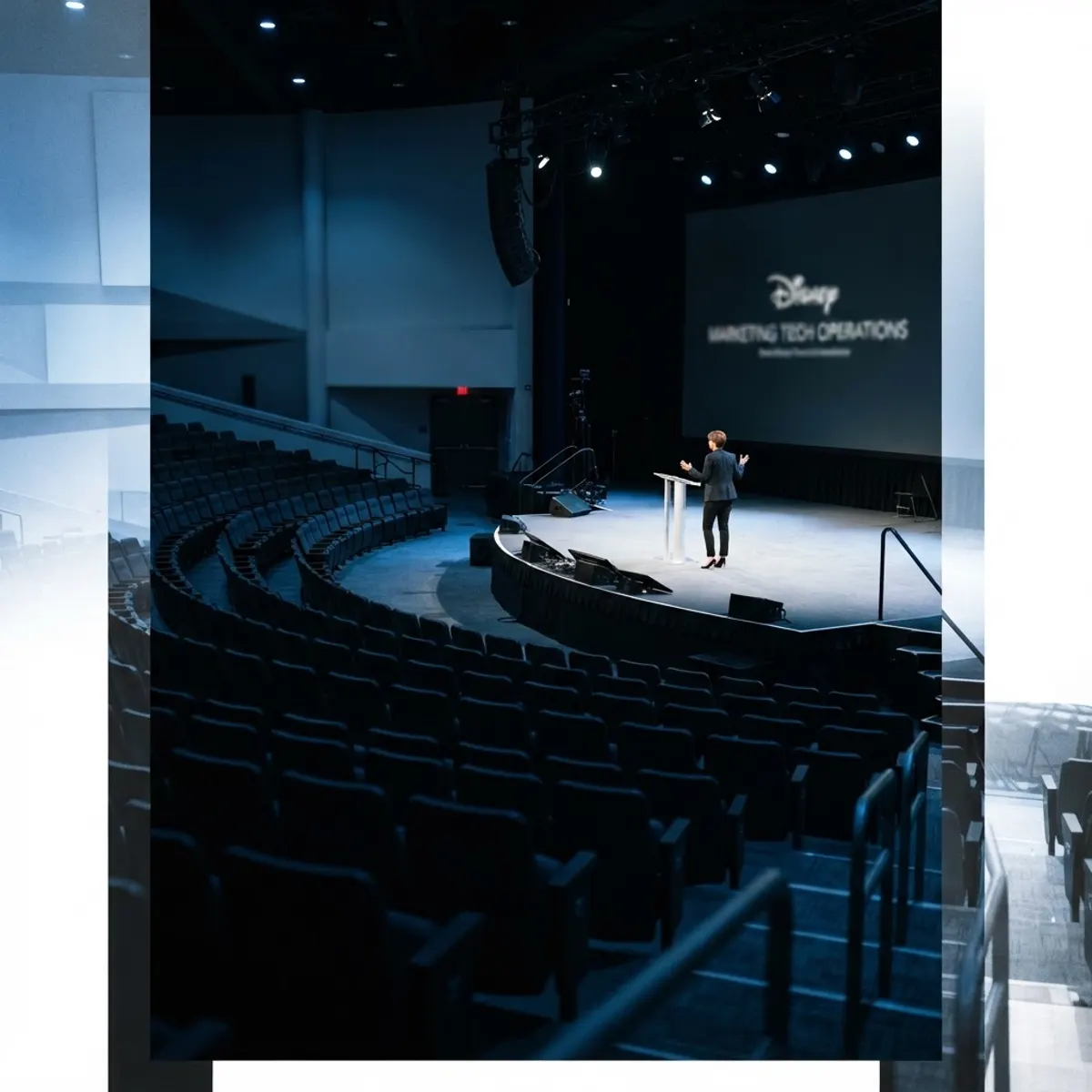
Disney is restructuring its marketing backbone by bringing in Jennifer Creegan to lead its technology and operations division. The appointment of Creegan as the new Head of Marketing Technology & Operations comes at a time when the entertainment giant is aggressively trimming the fat from its sprawling digital advertising apparatus. It's a move designed to collapse the silos that have plagued Disney's internal data workflows for years, a necessary, if painful, pivot toward a more centralized model of command and control.
Our analysis suggests that Disney's consolidation play reflects a broader industry pattern in which major media owners are pulling an estimated 30–40% of their programmatic operations in-house within the next 18 months. The math is simple: at Disney's scale, even a 15% reduction in third-party vendor fees translates to nine figures of recovered margin annually. Creegan's appointment signals that Disney has finally moved past the internal debate about whether to centralize, and straight into the harder question of how fast.
Creegan inherits an ecosystem that, while massive, has often struggled with fragmented legacy systems and disparate data lakes. Her primary mandate involves streamlining the Marketing Technology infrastructure to ensure that Disney's VAST library of content, ranging from ESPN's real-time sports data to the deep archives of its streaming platforms, can finally communicate effectively with its demand-side platforms.
"Disney is sitting on one of the most valuable first-party data assets in the industry, but raw data volume means nothing without a coherent identity layer stitching it together. Creegan's real job isn't technology consolidation, it's convincing ESPN's data team and the Disney+ streaming team to share the same operational playbook. That cultural alignment will take longer than any platform migration, and it's where these initiatives typically stall." said Marcus Delray, VP of Enterprise Ad Strategy at Meridian Media Group
The industry tension here is palpable. Media conglomerates like Disney are currently trapped in a zero-sum game between maintaining creative autonomy for individual studios and forcing those same studios into a rigid, unified operational efficiency that prioritizes centralized data harvesting over localized brand strategy. Adtech professionals understand the friction: the more you centralize, the more you risk stifling the agility required to react to fleeting consumer trends. Creegan is tasked with the impossible balance of scaling global efficiency without breaking the specialized tools that drive niche audience engagement.
"We are building a more cohesive pipeline that aligns our operational output with our long-term digital monetization strategy," said Jennifer Creegan, Head of Marketing Technology & Operations at Disney.
Consolidating these digital advertising capabilities is about more than just cost-cutting; it's about control. As Disney leans further into its direct-to-consumer ambitions, the reliance on third-party intermediaries has become a liability they can no longer afford. By bringing the technology stack in-house and under a single operational umbrella, the organization is betting that its own proprietary data will eventually trump the increasingly opaque performance metrics offered by external tech vendors.
If successful, this transition will allow Disney to treat its entire portfolio as a single, addressable entity. If it fails, they are simply building a more expensive, more centralized version of the same chaos they've spent the last decade trying to outrun. The pressure is on for Creegan to reconcile these architectural contradictions before the next fiscal cycle demands even deeper cuts to the very teams now being asked to standardize their workflows. It is an expensive gamble, requiring not just technical oversight but a complete cultural shift in how Disney views its own internal data assets. Efficiency, after all, is a double-edged sword when it cuts through the creative friction that generates engagement in the first place. Whether this consolidation eventually chokes the brand's ability to pivot remains the primary concern for the analysts watching from the sidelines. One thing is certain: Disney isn't playing for incremental gains here, they're playing for total structural dominance.
- For DSPs: Disney consolidating its stack in-house is a direct threat to managed-service revenue streams. Platforms that currently handle Disney's programmatic buying at arm's length should expect tighter access controls and more direct, less intermediated deal structures within the next two budget cycles.
- For Publishers: A more unified Disney identity graph means more precise audience targeting against premium inventory, which is good for CPMs in the short term, but will accelerate Disney's push toward direct publisher relationships, bypassing open-market pipes entirely.
- For Advertisers: Brands currently buying against Disney's audience segments through third-party platforms should prepare for a shift toward Disney's own Private Marketplace as the primary, and eventually exclusive, access point for its first-party data.
- For the Broader Market: If Disney's in-house model produces measurable efficiency gains, expect at least two or three competing media conglomerates to accelerate similar consolidation plays before the end of 2026. Creegan's results will be watched closely.
Disney has a narrow 12-to-18-month window to demonstrate that centralization produces both cost efficiencies and measurable lift in campaign performance before the next round of budget scrutiny arrives. If Creegan can ship a unified data infrastructure that meaningfully improves Attribution across ESPN, Hulu, and Disney+ simultaneously, the company establishes a proprietary moat that most ad-tech vendors simply cannot replicate. Fail to deliver that proof point, and the consolidation narrative collapses into an expensive internal reorganization, the kind Disney has weathered before, but can ill afford in the current streaming economy.