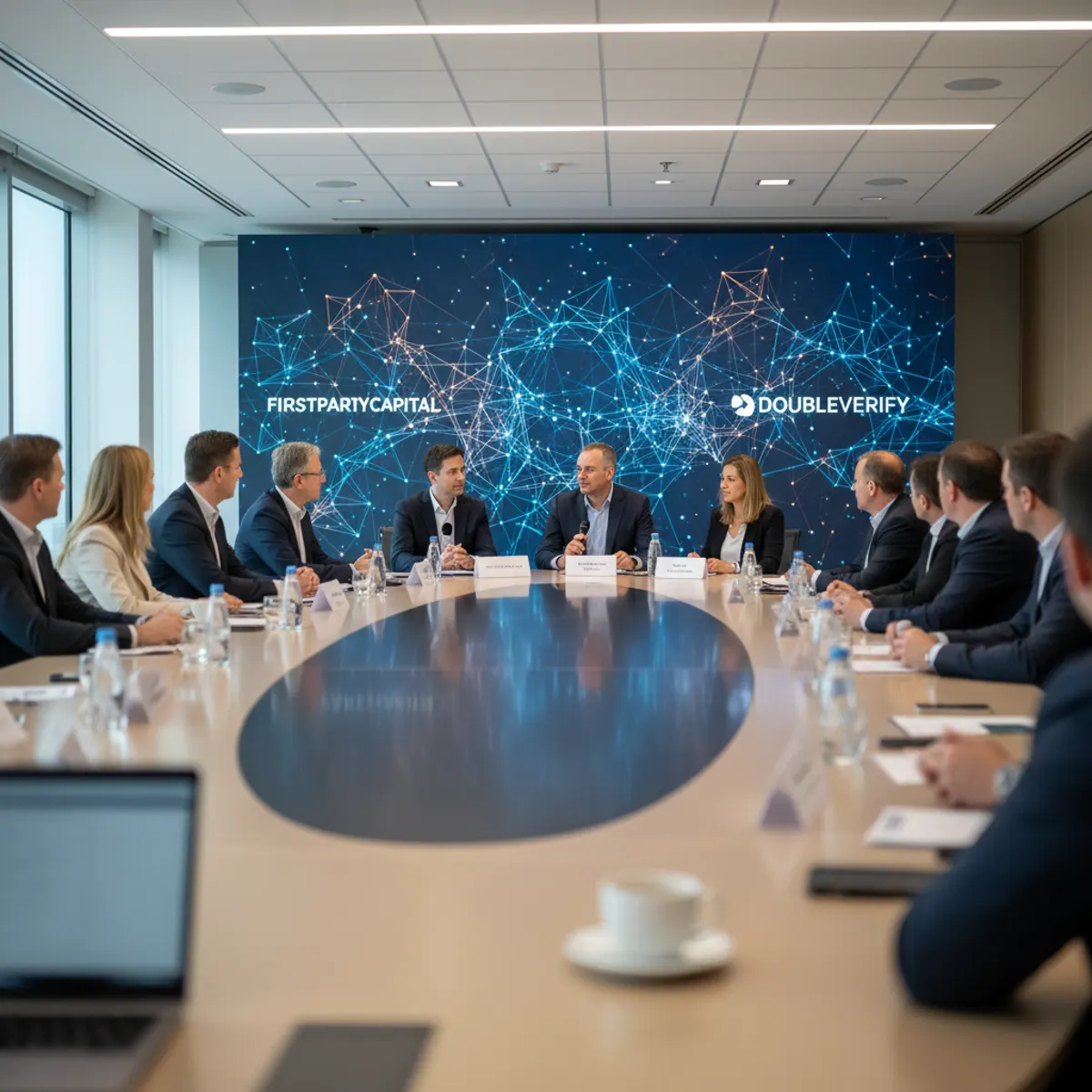
DoubleVerify has taken a direct stake in FirstPartyCapital, the London-based venture fund focused exclusively on adtech and martech startups, in a strategic investment that puts one of digital advertising's most influential verification players squarely inside the earliest stages of industry innovation. The deal, terms of which were not disclosed, effectively gives DoubleVerify visibility into — and influence over — a pipeline of emerging companies that could reshape how digital advertising is bought, sold, and measured over the next decade.
It's a bold move. And it's one that raises some genuinely interesting questions about what DoubleVerify is actually building toward.
Editorial Analysis: Our analysis suggests this investment is less a financial play and more a defensive one — DoubleVerify is paying for proximity to disruption before disruption finds it. With platform-native measurement tools now embedded across Google, Amazon, and Meta, third-party verification revenue faces structural compression that could erode margins by as much as 15–20% over the next three years. Getting inside the earliest funding conversations in adtech isn't optional anymore. For a company in DoubleVerify's position, it's table stakes.
FirstPartyCapital isn't a generalist fund that happens to back the occasional ad-tech company. It's built specifically around the premise that foundational changes in digital advertising — the deprecation of third-party cookies, the fragmentation of identity, the rise of retail media — require capital and expertise that only insiders can properly deploy. The fund's portfolio already includes companies working across privacy-preserving measurement, contextual intelligence, and programmatic infrastructure.
For DoubleVerify, the investment is less about financial returns and more about staying architecturally relevant. The company built its reputation on brand safety and verification — essential services, but ones that exist downstream of the decisions publishers, advertisers, and platforms make about their tech stacks. By embedding itself into FirstPartyCapital, DoubleVerify gets an early read on what those stacks might look like next.
"We're seeing a real concentration of genuinely original thinking in early-stage adtech right now," said Mark Pearlstein, Chief Revenue Officer at DoubleVerify. "Partnering with FirstPartyCapital gives us a front-row seat to where the industry's infrastructure is heading, not just where it's been."
That front-row seat matters more than it might sound. The uncomfortable truth inside adtech is that large, established verification and measurement companies face a structural risk: the platforms they measure keep expanding their own measurement and verification capabilities, threatening to commoditize the very services that players like DoubleVerify charge premium prices for. Amazon, Google, and Meta all have measurement tools. They don't need third-party verification — they tolerate it. That dynamic doesn't disappear with this investment, but it does give DoubleVerify a reason to be building something new rather than just defending something old.
"DoubleVerify has historically been a fast-follower for acquiring capability — they bought Scibids, they expanded into attention measurement, and now they're planting a flag inside early-stage capital. The real tell will be whether they start converting FirstPartyCapital portfolio relationships into acquisitions within 18 to 24 months. If two or three of those companies end up on DoubleVerify's balance sheet, this investment will look less like a bet on innovation and more like the most efficient M&A pipeline in the industry." — Rachel Dempsey, Head of Investment Strategy at Caliber AdTech Advisors
"DoubleVerify brings something most institutional investors simply can't — deep operating context," said Jon Skinner, General Partner at FirstPartyCapital. "They understand the actual purchase decisions our portfolio companies will face from buyers in the market. That's not just advisory value, it's a real commercial advantage for founders."
The fund's focus on first-party data infrastructure is worth unpacking. As signal loss from cookie deprecation forces advertisers and publishers to rebuild their data strategies from scratch, the companies building the plumbing — the clean rooms, the identity resolution layers, the contextual activation tools — are suddenly essential. They're also fragmented. Dozens of startups are competing in adjacent spaces without clear dominant players yet emerging. FirstPartyCapital's thesis is that backing the right infrastructure bets now, before consolidation happens, is where outsized returns will come from.
DoubleVerify investing into that thesis isn't just financial participation. It's a way of shaping which companies get the resources to scale — and by extension, which architectural decisions get baked into the industry's next generation of tooling.
For the startups in FirstPartyCapital's portfolio, having DoubleVerify as a strategic backer carries real weight. Enterprise adtech sales cycles are notoriously brutal — long, political, dependent on existing relationships between buyers and vendors. A startup trying to sell into a major agency holding company or a Fortune 500 brand advertiser doesn't just compete on product quality. It competes on trust, credibility, and whether the right people in the room are already comfortable with your name.
DoubleVerify's network covers exactly that territory. The company has direct relationships with the brands, agencies, and publishers that any scaling adtech startup desperately needs to reach.
There's a tension there, naturally. DoubleVerify will inevitably develop commercial views about which portfolio companies complement its own roadmap and which ones compete with it. That's not unique to this arrangement — corporate strategic investors always carry some version of that conflict. But in a fund as tightly focused as FirstPartyCapital, where portfolio companies are operating in closely adjacent spaces, the tension will occasionally be impossible to ignore.
What's genuinely interesting is whether DoubleVerify uses this position to become a more acquisitive company — because the fastest way to act on early-stage intelligence isn't observation. It's ownership.
- For Publishers: Clean room and identity resolution startups in FirstPartyCapital's portfolio gaining DoubleVerify's commercial backing could accelerate direct deals between publishers and a new class of infrastructure vendors — cutting reliance on platform intermediaries faster than most publisher revenue teams are currently planning for.
- For Brands and Advertisers: A DoubleVerify-connected portfolio of privacy-first measurement tools creates a more coherent path toward post-cookie attribution that doesn't route back through Google or Amazon's walled gardens. Procurement teams should be watching which FirstPartyCapital companies get fast-tracked into DoubleVerify's partner ecosystem.
- For DSPs and SSPs: If DoubleVerify begins acquiring from this portfolio, the verification and measurement layer of the programmatic stack starts looking a lot more consolidated — and potentially more expensive to integrate with. Existing DSP and SSP partnerships with DoubleVerify are worth revisiting before the M&A cycle starts in earnest.
- For AdTech Founders Outside the Portfolio: The signal here is that strategic capital from established verification and measurement players is becoming a meaningful alternative to traditional VC. Founders building in identity, contextual intelligence, or attention measurement now have a clearer sense of who the likely strategic acquirers are — and what alignment with those buyers looks like at the earliest stages.
DoubleVerify will almost certainly formalize a more structured commercial partnership program with FirstPartyCapital's portfolio companies within the next 12 months — expect joint go-to-market announcements that test which of those startups can sell meaningfully into DoubleVerify's existing customer base. If two or more of those pilots produce material revenue, the acquisition conversation starts immediately. The deeper risk is that this arrangement sets a precedent: other large verification and measurement players, including Integral Ad Science, will feel pressure to build their own early-stage pipelines before the most compelling infrastructure bets are locked up.
- AdTech's Shift Towards AI-Driven Media Buying Sparks Debate
- AI-Powered Programmatic Advertising: The Future of AdTech
- The AI-Driven Adtech Revolution: A Double-Edged Sword
- The AI-Powered AdTech Revolution: Hype or Reality?